The Three Types of Biodiversity Explained
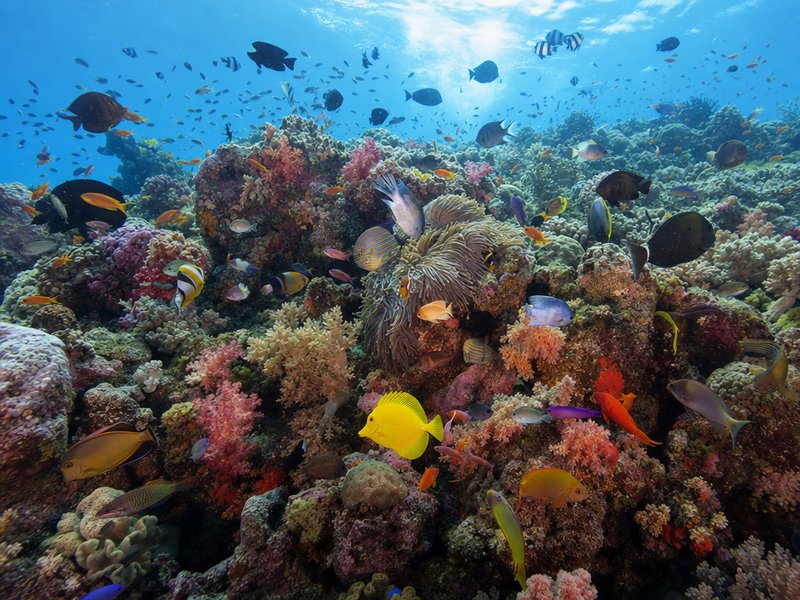
Biodiversity is not a single, monolithic quantity. Scientists recognise three distinct types of biodiversity, each operating at a different biological scale and requiring different measurement tools. Understanding these types is foundational to ecology, conservation biology, and the design of protected area networks — because a landscape that scores highly on one dimension may be impoverished on another.
Genetic Diversity
Genetic diversity refers to the total amount of genetic variation — differences in DNA sequences, allele frequencies, and genomic architecture — among individuals within a species or population. It is the most fundamental level of biodiversity, because all higher-level diversity ultimately stems from genetic variation acted upon by natural selection, genetic drift, mutation, and gene flow.
High genetic diversity within a population means that some individuals are likely to carry alleles conferring resistance to novel diseases, tolerance to temperature extremes, or the ability to exploit new food sources. This adaptive potential is the raw material that allows species to track shifting environmental conditions over evolutionary time. Populations that lose genetic diversity — through habitat fragmentation, overhunting, or catastrophic bottlenecks — face elevated extinction risk even if their census population size temporarily recovers, because they lack the genomic resources to adapt to future stresses.
Genetic diversity is measured using molecular markers such as microsatellites, SNPs (single nucleotide polymorphisms), and whole-genome sequencing. Key metrics include observed heterozygosity (Ho), expected heterozygosity (He), and effective population size (Ne), which accounts for the genetically effective contributors to the next generation rather than total census size.
Species Diversity
Species diversity is the most familiar type of biodiversity — the variety of species in a community, region, or ecosystem. It has two components:
- Species richness — the raw count of species present. A tropical rainforest hectare may contain 200 tree species; a boreal forest hectare might have 5.
- Species evenness — how equitably individuals are distributed among species. A community where one species makes up 99% of all individuals has low evenness even if it contains many species.
The most widely used combined measure is the Shannon-Wiener diversity index (H'), which weights species by their proportional abundance and reaches its maximum when all species are equally represented. Simpson's index (1 − D) is an alternative that downweights rare species and emphasises dominant ones. For comparing sites of different sampling effort, rarefaction curves normalise richness estimates to a common sample size, allowing fair comparison between communities.
Alpha, Beta, and Gamma Diversity
R.H. Whittaker's 1960 framework partitions species diversity across spatial scales:
- Alpha (α) diversity — species diversity within a single habitat patch or community. It is the number of species (or Shannon H') you would record in one forest plot, one reef transect, or one meadow quadrat.
- Beta (β) diversity — the change in species composition between two or more communities. High beta diversity means that moving from one habitat to the next yields a largely different set of species. It can be quantified using Sørensen's or Jaccard's dissimilarity indices. A landscape with high beta diversity contains more total biodiversity per unit area than one where all patches share the same species.
- Gamma (γ) diversity — the total species diversity across an entire landscape or region, integrating alpha and beta components: γ ≈ ᾱ × β (approximately).
This three-level framework has practical conservation implications. A reserve network designed purely to maximise total gamma diversity should include patches with high beta diversity — distinct habitats that contribute complementary species — rather than simply selecting the largest single patch.
Ecosystem Diversity
Ecosystem diversity refers to the variety of habitats, biotic communities, and ecological processes across a landscape or region. It captures the structural and functional heterogeneity of the living world: the difference between a coastal salt marsh, a neighbouring sand dune system, and the adjacent subtidal kelp forest — communities that may share some species but operate on entirely different ecological principles.
Ecosystem diversity is harder to quantify than genetic or species diversity because ecosystems do not have discrete boundaries. Ecologists use land-cover mapping, remote sensing, and habitat classification systems (such as the EU's EUNIS habitat classification or the IUCN Global Ecosystem Typology) to define and inventory ecosystem types at regional and global scales.
The importance of ecosystem diversity goes beyond mere variety. Different ecosystem types provide different ecosystem services — the benefits people derive from nature. Wetlands filter water and buffer floods; forests sequester carbon and moderate local climate; seagrass meadows support fisheries and trap sediment. A landscape that has converted diverse natural habitats into a monoculture — agricultural or urban — loses not only species richness but also the full portfolio of services that those habitats once provided.
Functional and Phylogenetic Diversity
Beyond the three classic types, researchers now routinely measure two additional dimensions:
Functional diversity describes the range of biological traits — body size, feeding strategy, dispersal ability, reproductive rate, root architecture — represented by the species in a community. It predicts ecosystem functioning better than species richness alone in many cases, because it captures whether species perform different ecological roles.
Phylogenetic diversity quantifies the evolutionary history represented by a species assemblage, measured as the total branch length on a phylogenetic tree connecting those species. Preserving phylogenetically diverse communities safeguards unique evolutionary lineages and the traits associated with them, many of which have practical value — in medicine, agriculture, and biotechnology.
How the Three Types Interconnect
The three levels of biodiversity are not independent. Genetic diversity underpins the adaptive capacity of populations; without it, species cannot track environmental change and local extinction probability rises. Species diversity loss simplifies ecological communities, reducing the redundancy and functional breadth that make ecosystems resilient. Ecosystem diversity loss eliminates entire categories of habitat and the species and services they support. Critically, collapse at any level feeds back to the others: a population bottleneck may allow a fungal pathogen to sweep through a genetically uniform species, reducing it from common to endangered, which in turn impoverishes the ecosystem it once structured.
Frequently Asked Questions
What are the three types of biodiversity?
The three recognised types are genetic diversity (variation in DNA among individuals within a species), species diversity (the variety and relative abundance of species in a community), and ecosystem diversity (the range of habitats, ecological communities, and processes across a region). Each level is interconnected: loss at the genetic level can precede local species extinction, which in turn erodes ecosystem diversity.
What is the difference between alpha, beta and gamma diversity?
Alpha diversity is species diversity within a single habitat patch. Beta diversity measures the change in species composition between two or more communities — high beta diversity means habitats differ markedly in their species. Gamma diversity is the total species diversity across an entire landscape or region. The framework, introduced by R.H. Whittaker in 1960, allows ecologists to partition total diversity into within-community and between-community components, which is useful for designing reserve networks and monitoring landscape health.
How is species diversity measured?
Species diversity combines species richness (the raw count of species) and species evenness (how equitably individuals are distributed among species). The Shannon-Wiener index (H') incorporates both components and is the most widely used combined measure. Simpson's diversity index (1 − D) weights dominant species more heavily. For comparing sites of different sampling effort, rarefaction curves normalise richness estimates to a common sample size, enabling fair comparison between communities.
Why is genetic diversity important for conservation?
Genetic diversity is the raw material for evolutionary adaptation. Populations with high genetic diversity are better able to respond to novel pathogens, environmental change, and habitat shifts because some individuals will carry alleles conferring resistance or tolerance. Low genetic diversity — typical of populations that have passed through a bottleneck — increases inbreeding depression, reduces adaptive potential, and raises extinction risk. Conservation programmes typically aim to maintain effective population sizes above 500 individuals specifically to preserve genetic diversity over the long term.
What is functional biodiversity?
Functional biodiversity refers to the range of biological traits — feeding strategy, body size, dispersal ability, reproductive rate — represented by the species in a community. It goes beyond simply counting species to ask whether those species perform different ecological roles. A community of 20 insectivorous bird species may have low functional diversity compared to a community of 10 species spanning herbivores, insectivores, and frugivores. Functional diversity is often a stronger predictor of ecosystem productivity and resilience than species richness alone.
What is phylogenetic diversity?
Phylogenetic diversity (PD) quantifies the evolutionary history represented by a set of species, measured as the total branch length of the phylogenetic tree connecting them — formalised by Daniel Faith in 1992. Preserving phylogenetically diverse communities safeguards unique evolutionary lineages and the distinctive traits associated with them. Crucially, it is possible to lose considerable phylogenetic diversity even when species richness remains constant, if the species that go extinct are disproportionately the most phylogenetically distinct — for example, if all monotremes disappeared, species richness would fall by only two but an entire branch of mammalian evolution 166 million years old would be lost.
What is ecosystem diversity and why does it matter?
Ecosystem diversity refers to the range of habitats, biotic communities, and ecological processes across a landscape or region — the structural and functional difference between a coastal salt marsh, a neighbouring sand dune system, and the adjacent kelp forest. It is harder to quantify than genetic or species diversity because ecosystems lack discrete boundaries; ecologists use land-cover mapping, remote sensing, and classification systems such as the IUCN Global Ecosystem Typology. It matters because different ecosystem types provide different ecosystem services: wetlands filter water and buffer floods; forests sequester carbon; seagrass meadows support fisheries. A landscape homogenised into agricultural monoculture loses not only species but the entire portfolio of services those habitats once provided.
Which type of biodiversity is most important to protect?
All three types are interdependent, so prioritising one in isolation is misleading — but genetic diversity is often considered the most fundamental, because it is the raw material for evolutionary adaptation at every other level. Without genetic variation, species cannot respond to environmental change, and the evolutionary potential encoded in higher levels of diversity is lost. In practice, conservation prioritises species diversity and ecosystem integrity as proxies because they are more measurable, while genetic diversity is protected implicitly through maintaining large, well-connected populations and managing captive breeding programmes to maximise effective population size.