Threats to Biodiversity: Six Drivers of Global Species Loss
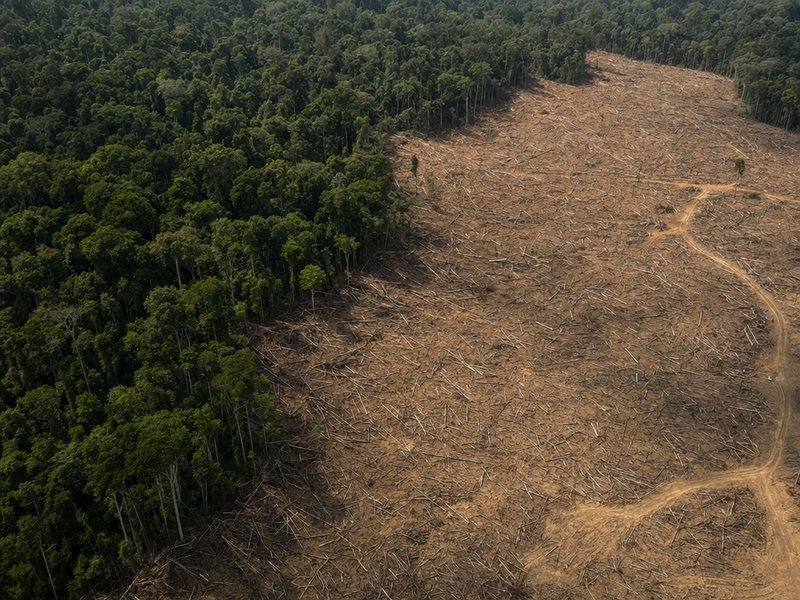
The IPBES 2019 Global Assessment reached a stark conclusion: approximately one million animal and plant species face extinction, many within decades — the fastest rate of biodiversity loss in human history. Extinction rates are currently estimated at 100 to 1,000 times the natural background rate that prevailed before the industrial era. Scientists have identified six primary categories of threat driving this crisis, often acting in combination and reinforcing one another through complex feedbacks.
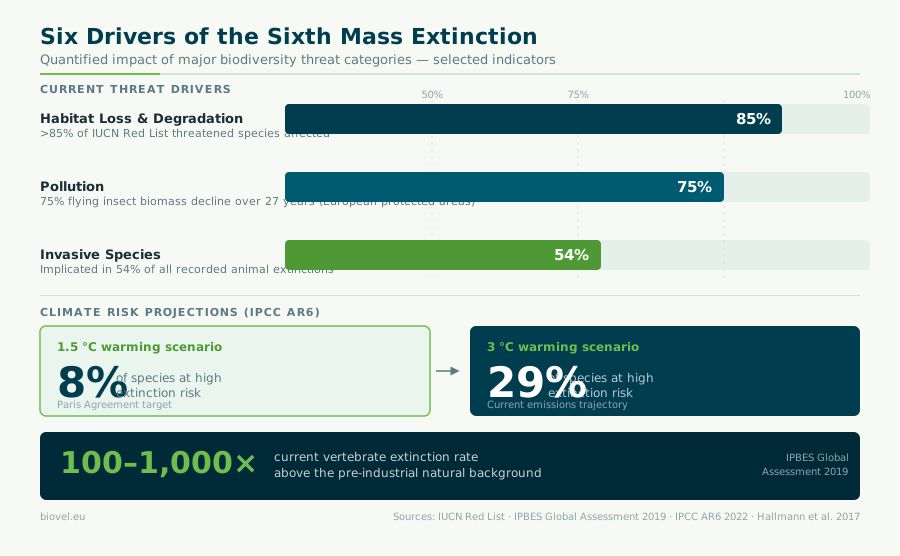
Embed this graphic
1. Habitat Loss and Degradation
Habitat loss is the single largest driver of biodiversity decline, implicated in the threatened status of more than 85% of all species on the IUCN Red List. It encompasses three distinct processes:
- Habitat destruction — the outright conversion of natural land to agriculture, urban areas, or infrastructure. Tropical forests have been the most affected; the Amazon alone lost roughly 760,000 km² between 1978 and 2020.
- Habitat degradation — ecosystems that remain but in a functionally impaired state due to pollution, invasive species, altered hydrology, or overuse. A degraded forest fragment may retain its canopy but have lost many interior-specialist species.
- Habitat fragmentation — the breaking of continuous habitat into smaller, isolated patches. Fragmentation increases edge effects, reduces patch size below minimum territory requirements for large species, and cuts off dispersal corridors. The result — documented by MacArthur and Wilson's island biogeography theory — is predictable species loss proportional to the reduction in patch area.
Agricultural expansion is the dominant cause: roughly half of the world's habitable land has been converted to agriculture, and this conversion continues at approximately 5–12 million hectares per year.
2. Invasive Alien Species
Invasive alien species — organisms established outside their native range that cause ecological harm — are implicated in approximately 54% of all recorded animal extinctions since 1500. They threaten native biodiversity through direct predation, competition for resources, habitat modification, hybridisation that dilutes genetic integrity, and transmission of novel pathogens.
Island ecosystems are disproportionately vulnerable: species that evolved in the absence of mammalian predators are naively unafraid of introduced rats, cats, and mongooses. Rats and cats alone are responsible for 44% and 26% respectively of all island bird extinctions since 1500. Freshwater systems are also acutely susceptible: the introduction of Nile perch (Lates niloticus) to Lake Victoria in the 1950s drove more than 200 endemic cichlid species to extinction or near-extinction — one of the most rapid freshwater biodiversity collapses ever recorded.
3. Overexploitation
Overexploitation — harvesting wild species faster than their populations can reproduce — is a major driver of decline for many commercially valuable or culturally significant species. Hunting, fishing, logging, and collection for the wildlife trade each play a role.
Marine fisheries are the best-documented case: the FAO estimates that 34% of global fish stocks are fished at biologically unsustainable levels, up from 10% in 1974. The collapse of Atlantic cod populations on the Grand Banks in the early 1990s — after 500 years of sustained harvest — illustrates how rapidly industrial-scale fishing can overcome natural population resilience. On land, the bushmeat trade, traditional medicine demand (shark fin, rhinoceros horn, pangolin scales), and the pet trade collectively represent a multi-billion-dollar pressure on wild populations.
4. Pollution
Pollution affects biodiversity through multiple pathways. Nutrient pollution (nitrogen and phosphorus from agricultural runoff) causes eutrophication of freshwater and coastal marine systems, leading to algal blooms, oxygen depletion, and fish kills. More than 500 oxygen-depleted "dead zones" now exist in the world's coastal waters. Pesticide contamination has driven dramatic declines in insect biomass — studies in Germany reported a 75% reduction in total flying insect biomass over 27 years in protected areas. Plastic pollution affects at least 700 marine species through ingestion, entanglement, and bioaccumulation of persistent organic pollutants. Light and noise pollution are increasingly recognised as disruptors of navigation, reproduction, and communication in nocturnal and acoustically dependent species.
5. Climate Change
Climate change is the most rapidly escalating threat to biodiversity and is projected to surpass habitat loss as the primary driver of extinction within several decades. Its effects include:
- Range shifts — species tracking suitable climate envelopes poleward and upslope. Mountain-top species face elimination when they run out of altitude; polar species face range compression from both ends.
- Phenological mismatches — warming advances the timing of plant flowering, insect emergence, and bird migration, desynchronising relationships between species. Caterpillar peak emergence may now precede the hatching of chicks in migratory birds whose arrival cues are less responsive to temperature change.
- Ocean acidification and warming — CO₂ absorption by seawater reduces pH, impairing calcification in corals, molluscs, and pteropods. Combined with marine heatwaves, ocean warming has caused mass coral bleaching events of increasing frequency and severity: the Great Barrier Reef experienced unprecedented back-to-back bleaching in 2016 and 2017.
- Extreme events — more frequent droughts, fires, floods, and storms directly kill individuals and can rapidly reduce populations below viable thresholds.
The IPCC projects that limiting warming to 1.5°C above pre-industrial levels will put approximately 8% of species at high extinction risk; at 3°C, that figure rises to 18–29% of species.
6. Infectious Disease
Emerging infectious diseases are an increasingly recognised threat, often operating synergistically with other stressors. Chytrid fungus (Batrachochytrium dendrobatidis and B. salamandrivorans) has caused the decline or extinction of at least 500 amphibian species — the largest disease-driven loss of vertebrate biodiversity in recorded history. White-nose syndrome, caused by the fungus Pseudogymnoascus destructans, has killed an estimated six million North American bats since its arrival in 2006. The wildlife trade and habitat encroachment increase the risk of pathogen spillover from wildlife to humans (zoonotic disease), creating feedback loops in which disease control measures — culling of suspect wildlife — can themselves harm biodiversity.
Synergies and the Sixth Mass Extinction
These six threats rarely act alone. Habitat fragmentation increases inbreeding depression and reduces the genetic diversity needed to resist disease. Climate change amplifies overexploitation by reducing the productive capacity of fish stocks. Invasive species are facilitated by disturbed and degraded habitats. Pollution weakens immune systems and reduces individual fitness, making populations more susceptible to disease and climate stress.
The collective outcome — described by many scientists as the "sixth mass extinction" — is a biotic crisis without parallel in human history. Unlike the five previous mass extinctions, which were driven by geological or astronomical events, the current crisis is primarily anthropogenic, which means it is, in principle, reversible through policy, land use change, and direct conservation intervention.
Frequently Asked Questions
What is the biggest threat to biodiversity?
Habitat loss and degradation is the single largest driver of biodiversity decline, affecting more than 85% of all species currently listed as threatened on the IUCN Red List. Agricultural expansion, urban development, and infrastructure construction are the dominant causes. Climate change is projected to overtake habitat loss as the primary threat within several decades, particularly for polar, alpine, and range-restricted species.
How does climate change affect biodiversity?
Climate change affects biodiversity through shifting species range boundaries poleward and upslope, altering the timing of seasonal events and disrupting pollinator-plant synchrony, increasing the frequency of extreme weather events, causing coral bleaching through ocean warming and acidification, and enabling the range expansion of invasive species and diseases. The IPCC projects that 1.5°C of warming will put 8% of species at high extinction risk; at 3°C that figure rises to 18–29%.
What are invasive species and why are they a threat?
Invasive alien species are organisms introduced outside their native range that establish, spread, and cause ecological harm. They threaten biodiversity through predation, competition, hybridisation, habitat modification, and disease transmission. Invasive species are implicated in 54% of all recorded animal extinctions, making them the second-largest driver of global biodiversity loss. Island ecosystems are disproportionately affected because their native species evolved in the absence of many predators and competitors.
What does overexploitation mean in ecology?
Overexploitation refers to the harvesting of wild species — through hunting, fishing, logging, or collection for the wildlife trade — at rates faster than populations can reproduce and recover. It is a major driver of decline for many large vertebrates, sharks, and commercially important fish stocks. The FAO estimates that 34% of global fish stocks are currently fished at biologically unsustainable levels.
Are we in a sixth mass extinction?
Evidence strongly suggests so. The IPBES 2019 Global Assessment estimated that approximately one million animal and plant species face extinction, many within decades. Current vertebrate extinction rates are 100 to 1,000 times the natural background rate. Unlike the five previous mass extinctions — caused by geological or astronomical events — the current crisis is primarily anthropogenic, which means it is in principle reversible through policy change and direct conservation action.
How does pollution affect wildlife and biodiversity?
Pollution harms biodiversity through multiple pathways. Nutrient pollution (nitrogen and phosphorus from agricultural runoff) causes eutrophication of freshwater and coastal systems, producing oxygen-depleted dead zones lethal to fish and invertebrates — more than 500 such zones now exist globally. Pesticide contamination has driven a 75% decline in total flying insect biomass in some European protected areas over 27 years. Plastic pollution affects at least 700 marine species through ingestion and entanglement. Light and noise pollution disrupt navigation, reproduction, and communication in nocturnal and acoustically dependent species such as sea turtles, bats, and cetaceans.
What is habitat fragmentation and how does it differ from habitat loss?
Habitat loss refers to the outright conversion or destruction of a natural area — a forest cleared for agriculture is lost. Habitat fragmentation is the subdivision of a continuous habitat into smaller, isolated patches without necessarily reducing total habitat area, though in practice fragmentation usually accompanies loss. Fragmentation harms biodiversity by isolating populations, preventing dispersal and gene flow between patches, creating edge effects (altered microclimates and increased predation at fragment boundaries), and reducing patch size below the minimum area requirements of wide-ranging species. Even landscapes with substantial remaining habitat can suffer biodiversity decline if that habitat is heavily fragmented.
What conservation strategies are most effective at halting biodiversity decline?
Evidence points to several high-impact strategies: expanding and effectively managing protected area networks (the 30x30 target — protecting 30% of land and sea by 2030 — has scientific support as a minimum threshold); restoring degraded habitats, particularly forests and wetlands, to reconnect fragmented patches; controlling invasive species, especially on islands; reducing unsustainable exploitation through fisheries management and anti-poaching enforcement; and addressing the underlying drivers through land-use change policy, sustainable agriculture, and reduced consumption. Financing mechanisms such as biodiversity offsets, debt-for-nature swaps, and payments for ecosystem services are increasingly used to align economic incentives with conservation outcomes.