Population Ecology: Understanding How Populations Change Over Time
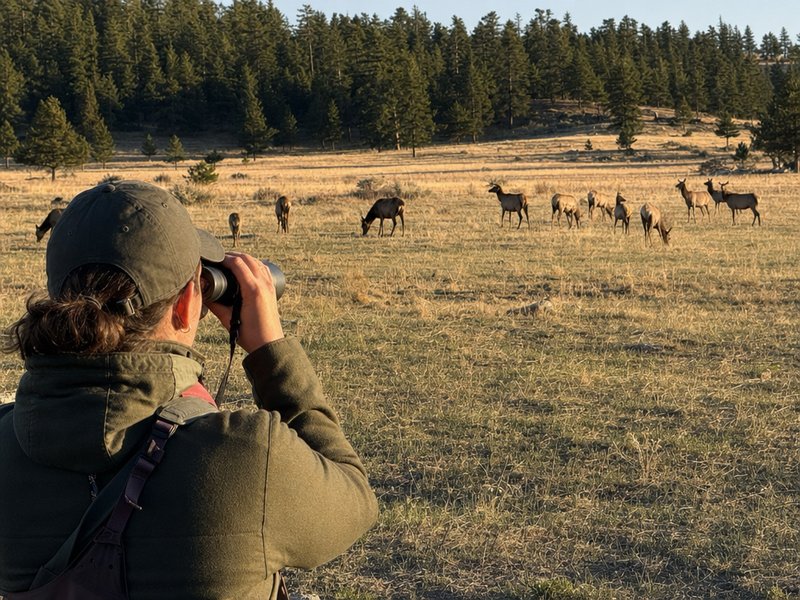
Population ecology is the branch of ecology that examines how groups of individuals from the same species change in size, density, and composition across time and space. It asks fundamental questions: why do some populations grow explosively while others dwindle to extinction? What stops an unchecked population from consuming every available resource? How does a species persist across a fragmented landscape where individual local populations regularly blink out?
The discipline sits at the intersection of mathematics, biology, and environmental science. Its models — ranging from simple differential equations to complex agent-based simulations — provide the quantitative backbone for fisheries management, invasive species control, disease epidemiology, and conservation planning. Understanding population ecology is, in many respects, a prerequisite for understanding biodiversity at any larger scale.
What Is a Population in Ecology?
In ecology, a population is a group of individuals of the same species that live in the same area at the same time and are capable of interbreeding. The boundaries of a population are usually defined by the habitat patches the species occupies, though in practice ecologists may draw them pragmatically around a lake, a forest fragment, or a coastline transect.
Key population attributes that ecologists measure include:
- Population size (N) — the total number of individuals
- Population density — individuals per unit area or volume
- Age structure — the proportion of individuals in each age class
- Sex ratio — proportion of males to females
- Spatial distribution — whether individuals are randomly, uniformly, or clumpily dispersed
These attributes together determine a population's potential for growth, its resilience to disturbance, and its long-term viability.
Population Growth Models
Exponential Growth
The simplest population model assumes unlimited resources. Under these conditions, every individual reproduces at the same rate and the population grows proportionally to its size. This is described by the exponential (or Malthusian) growth equation:
dN/dt = rN
Here, N is population size, t is time, and r is the intrinsic rate of natural increase — the difference between the per-capita birth rate and per-capita death rate. When r > 0, the population grows; when r < 0, it shrinks. The result is a J-shaped curve. Exponential growth can be observed in populations recently introduced to resource-rich environments — for example, reindeer introduced to St Matthew Island in 1944 grew from 29 individuals to 6,000 before catastrophically collapsing.
Logistic Growth and Carrying Capacity
In reality, resources are finite. As a population grows, competition intensifies, food becomes scarcer, and disease spreads more readily. The logistic growth model incorporates this feedback through the carrying capacity (K) — the maximum population size the environment can support indefinitely:
dN/dt = rN(1 − N/K)
When N is much smaller than K, the term (1 − N/K) approaches 1 and growth is nearly exponential. As N approaches K, the term shrinks toward zero, slowing growth to a halt. The resulting S-shaped (sigmoidal) curve is more realistic than pure exponential growth and underpins fisheries management quota models, wildlife carrying-capacity assessments, and livestock stocking-rate calculations.
r-Selection and K-Selection
MacArthur and Wilson's r/K selection theory (1967) classifies species by their reproductive strategies. r-selected species (opportunists) allocate resources to rapid reproduction — high birth rates, early maturity, small offspring with little parental investment — and are adapted to unpredictable, resource-rich environments. Examples include dandelions, mice, and most insects. K-selected species (equilibrium species) reproduce slowly, invest heavily in few offspring, and are adapted to stable environments near carrying capacity. Examples include elephants, whales, and large primates.
This dichotomy has been refined over subsequent decades — most species fall on a continuum rather than in two discrete bins — but the framework remains a useful heuristic for predicting population responses to disturbance and for prioritising conservation effort.
Density-Dependent and Density-Independent Regulation
Population size is regulated by two broad classes of factor:
Density-dependent factors intensify as population density increases, providing negative feedback that stabilises populations near carrying capacity. Intraspecific competition for food and territory, predation (which increases as prey become easier to find), parasitism and disease transmission, and stress-induced reproductive suppression all fall into this category.
Density-independent factors affect populations equally regardless of their size. Frost events, droughts, wildfires, and volcanic eruptions can kill a fixed proportion of a population — or a fixed absolute number — whether the population is sparse or crowded. Many population crashes combine both: density-independent stress (e.g., drought) pushes a population low enough that Allee effects (cooperation and mate-finding difficulties at low density) prevent recovery.
Metapopulation Theory
In fragmented landscapes, populations rarely exist in isolation. The metapopulation concept, formalised by Richard Levins in 1969, describes a regional assemblage of local populations connected by dispersal. Each patch can be occupied or vacant; local populations turn over through extinction and re-colonisation events. The key insight is that a species can persist regionally even as individual patches routinely go extinct, provided dispersal connects patches fast enough to offset local extinction rates.
Metapopulation theory is now central to conservation planning for fragmented habitats — it explains why isolated forest fragments lose species faster than their area alone would predict, and why maintaining dispersal corridors between habitat patches is critical for long-term species persistence.
Applications in Conservation and Research
Population ecology tools translate directly into management decisions. Population viability analysis (PVA) uses demographic models to estimate the probability that a population will survive for a defined time horizon, accounting for environmental and demographic stochasticity. The result informs minimum viable population (MVP) estimates — typically around 500–5,000 individuals depending on generation time and variance — which guide captive breeding release targets and reserve size calculations.
In fisheries, stock-recruitment models derived from population ecology determine maximum sustainable yield (MSY) — the largest catch that can be taken without impairing long-term productivity. In epidemiology, the basic reproduction number R₀ (pronounced "R-naught") is a direct import from population ecology: it represents the average number of secondary infections caused by one infected individual in a fully susceptible population, exactly analogous to the net reproductive rate in demography.
Ecological niche modelling (ENM) — one of the workflows documented on this site — extends population ecology into geographic space, predicting where suitable conditions for a population exist across a landscape and how that distribution might shift under climate change scenarios.
Frequently Asked Questions
What is the definition of population ecology?
Population ecology is the scientific study of how populations of organisms — groups of individuals of the same species living in the same area — change in size, density, age structure, and distribution over time. It examines the biological and environmental factors that drive population growth, regulation, and decline, using mathematical models to make quantitative predictions.
What is carrying capacity in population ecology?
Carrying capacity (K) is the maximum population size that an environment can sustain indefinitely given available food, water, shelter, and other limiting resources. In the logistic growth model, population growth rate slows as population size approaches K and stops entirely at K. Real populations often oscillate around carrying capacity rather than reaching a precise equilibrium, due to time lags in density-dependent responses.
What is the difference between exponential and logistic population growth?
Exponential growth (dN/dt = rN) assumes unlimited resources and describes populations growing at a constant per-capita rate r, producing a J-shaped curve. Logistic growth (dN/dt = rN(1 − N/K)) adds a density-dependent brake: as population size N approaches carrying capacity K, growth slows and the curve levels off in an S-shape (sigmoidal). Most natural populations show logistic or more complex dynamics rather than pure exponential growth.
What are density-dependent factors in population regulation?
Density-dependent factors are regulatory forces whose strength changes with population density — including intraspecific competition for food or space, predation rates, disease transmission, and stress-induced reproductive suppression. They provide negative feedback that stabilises populations near carrying capacity. By contrast, density-independent factors — such as extreme weather events or wildfires — affect populations regardless of how crowded they are and can cause rapid population crashes unrelated to resource availability.
What is a metapopulation in ecology?
A metapopulation is a set of spatially separate local populations of the same species connected by occasional dispersal of individuals between habitat patches. Formalised by Richard Levins in 1969, the concept explains how a species can persist regionally even as individual local populations go extinct — provided re-colonisation from other patches occurs fast enough. Metapopulation theory is foundational for conservation planning in fragmented landscapes and for understanding how habitat corridors help maintain biodiversity.
What is the net reproductive rate (R₀)?
The net reproductive rate (R₀) is the average number of offspring produced per female during her lifetime, weighted by the probability of surviving to each reproductive age class. R₀ > 1 indicates a growing population; R₀ = 1 indicates stability; R₀ < 1 indicates decline. In epidemiology the same symbol denotes the basic reproduction number — the average number of new infections per infected individual — directly drawing on the population ecology framework.
What is r/K selection theory in ecology?
r/K selection theory, proposed by MacArthur and Wilson in 1967, classifies species by reproductive strategy. r-selected species (opportunists) maximise intrinsic growth rate: high birth rates, early maturity, small offspring with minimal parental investment — adapted to unpredictable, resource-rich environments. Examples include mice, insects, and weedy plants. K-selected species (equilibrium species) reproduce slowly, invest heavily in few offspring, and are adapted to stable environments near carrying capacity. Examples include elephants, whales, and large primates. Most species fall on a continuum rather than in discrete bins, but the framework remains a useful heuristic for predicting population responses to disturbance.
What is population viability analysis (PVA)?
Population viability analysis (PVA) is a modelling framework that estimates the probability of a population persisting for a defined time horizon — typically 50 to 100 years — given its demographic rates, environmental variability, and stochastic events. PVA outputs include the minimum viable population (MVP) size: the threshold below which extinction risk becomes unacceptably high. MVPs are typically estimated at 500–5,000 individuals depending on generation time and variance. PVA results inform captive breeding targets, reserve size calculations, and translocation planning in conservation programmes.