Biodiversity Hotspots: What They Are and Why They Matter
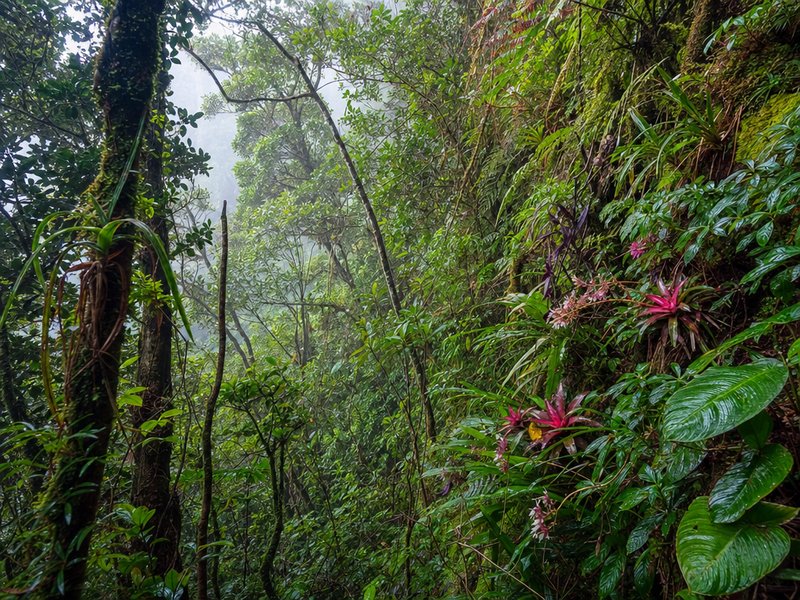
In 1988, ecologist Norman Myers published a paper in Nature that would reshape conservation strategy for decades: an analysis of where threatened endemic plant species coincided with rapid habitat destruction. Myers identified ten tropical forest "hotspots" — areas where extraordinary biological uniqueness and extreme conservation urgency overlapped. The concept, expanded and formalised by Conservation International, now underpins a global conservation framework of 36 hotspots that guides billions of dollars of annual protection spending.
The Two Qualifying Criteria
A region qualifies as a biodiversity hotspot only if it meets both of the following thresholds simultaneously:
- At least 1,500 endemic vascular plant species — species of flowering plants, conifers, ferns, and related groups that are found only in that region and nowhere else on Earth. The 1,500-species threshold is demanding: the entire British Isles contains fewer than 1,600 native vascular plant species, with virtually none endemic to Britain alone.
- Loss of at least 70% of original primary vegetation — the region must already be severely degraded. This ensures that hotspots are not merely diverse, but also urgently threatened. A pristine, intact biome with 2,000 endemic species would not qualify if it retains 90% of its original habitat.
The dual-criterion approach targets conservation investment at areas offering the highest return: regions that are both irreplaceable (unique endemic species that cannot be conserved anywhere else) and critical (habitat so degraded that further delay in protection risks permanent loss).
Scale and Coverage
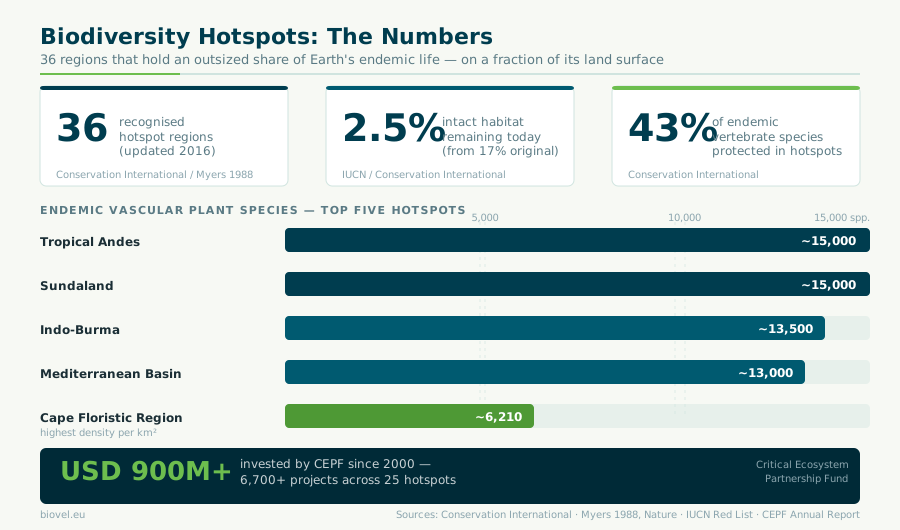
Together, the 36 recognised hotspots covered approximately 35.5 million km² in their original extent — roughly 23.5% of Earth's land surface. Due to the 70%-loss-of-habitat criterion, intact primary vegetation now remains on only about 2.5% of Earth's land. Yet within these diminished remnants, biodiversity is extraordinary:
- More than 150,000 endemic vascular plant species — approximately 50% of all plant species on Earth
- More than 43% of all bird, mammal, reptile, and amphibian species, as endemics
- Approximately 35% of all vertebrate species
This disproportionate concentration of endemic life in a small fraction of Earth's land surface provides the conservation logic for hotspot prioritisation: protecting and restoring these areas safeguards more of the irreplaceable fraction of biodiversity per hectare than protecting any equivalent area elsewhere.
Embed this graphic
Selected Hotspot Profiles
The Tropical Andes
Stretching from Venezuela through Colombia, Ecuador, Peru, and Bolivia to northern Argentina, the Tropical Andes is widely regarded as the most biologically diverse terrestrial region on Earth. Altitude creates an extraordinary range of climatic zones — from lowland Amazon rainforest to high-altitude puna grassland and glacial páramo — in compressed horizontal distance, generating exceptional beta diversity. The hotspot contains approximately 15,000 endemic vascular plant species, 600 endemic birds, and more endemic amphibian species than any other hotspot. Around 75% of its original habitat has been lost to agriculture, livestock grazing, and urban expansion.
Sundaland
Sundaland encompasses the western portion of the Malay Archipelago — the Malay Peninsula, Borneo, Sumatra, Java, and associated islands. During glacial periods, much of this region was dry land, allowing species to disperse across what are now sea channels. Today it harbours approximately 15,000 endemic plant species and is one of the last refuges for Sumatran orangutans, Bornean pygmy elephants, and Sumatran rhinos. Deforestation for palm oil, pulpwood, and smallholder agriculture has reduced intact forest to approximately 7% of the original cover.
Madagascar and the Indian Ocean Islands
Madagascar separated from Africa approximately 88 million years ago, creating a natural laboratory for evolution in isolation. More than 90% of its reptile species, 83% of its mammals, and approximately 80% of its plants are endemic. The island's lemurs — over 100 species — are found nowhere else. Slash-and-burn agriculture and charcoal production have destroyed roughly 90% of Madagascar's original forest cover, making it one of the most acute conservation crises globally.
The Mediterranean Basin
Europe's only biodiversity hotspot spans the lands bordering the Mediterranean Sea — from Portugal and Morocco to Turkey and the Levant. It contains approximately 13,000 endemic plant species, many concentrated in the evergreen shrubland (maquis/garrigue) ecosystems characteristic of the climate. Urbanisation, tourism infrastructure, agricultural intensification, and increasingly severe wildfire regimes driven by drought have degraded or destroyed more than 70% of the original natural vegetation.
The Cape Floristic Region
Located at the southern tip of Africa, the Cape Floristic Region is the smallest of the recognised hotspots yet arguably the most species-dense. It contains approximately 6,210 endemic plant species in an area of only 90,000 km² — a species richness comparable to entire continental regions. The fynbos biome, characterised by hard-leaved shrubs and spectacular diversity of the Proteaceae and Restionaceae families, is found nowhere else. Wine and wheat agriculture, invasive Australian acacias and pines, and altered fire regimes are the primary threats.
Threats Within Hotspots
The fact that hotspots are defined in part by historical habitat loss means that ongoing threats are particularly acute. Agricultural expansion — the primary driver globally — is especially damaging in tropical hotspots where remaining forest fragments are small, isolated, and surrounded by agricultural land. Climate change is altering precipitation regimes, fire frequencies, and species distributions in ways that interact poorly with already-fragmented habitats. Invasive species and overexploitation compound these pressures in many hotspot regions.
Conservation Investment and Outcomes
The Critical Ecosystem Partnership Fund (CEPF), co-managed by Conservation International, the World Bank, and several other partners, is the principal multilateral funding mechanism for hotspot conservation. Since its founding in 2000, CEPF has invested over USD 900 million in more than 6,700 projects across 25 hotspots. Successful outcomes include the recovery of several large mammal populations where poaching has been reduced, the restoration of degraded habitat linking isolated forest fragments, and the discovery of hundreds of new species in poorly surveyed hotspot regions each year — reinforcing that biological inventories in hotspots remain incomplete.
Frequently Asked Questions
What is a biodiversity hotspot?
A biodiversity hotspot is a biogeographic region that meets two strict criteria: it must contain at least 1,500 endemic vascular plant species (found nowhere else on Earth), and it must have already lost at least 70% of its original primary vegetation. Regions qualifying under both criteria are both exceptionally species-rich and under severe conservation threat, making them global conservation priorities.
How many biodiversity hotspots are there?
Conservation International currently recognises 36 biodiversity hotspots worldwide. The concept was first proposed by Norman Myers in 1988 with 10 tropical forest hotspots. The list has been revised several times, most recently in 2016. Together they cover approximately 17% of Earth's total land area in original extent, but only about 2.5% of land in terms of remaining intact primary habitat.
What makes an area a biodiversity hotspot?
A region must meet two quantitative thresholds: (1) at least 1,500 endemic vascular plant species — species restricted to that region and found nowhere else; and (2) at least 70% of the region's original primary vegetation already destroyed or severely degraded. Both criteria must be satisfied simultaneously. High endemism ensures biological value; high habitat loss ensures conservation urgency.
Why are biodiversity hotspots important?
Biodiversity hotspots are important for three reasons: they concentrate unique species found nowhere else (whose loss is globally irreversible), they deliver disproportionate ecosystem services, and they represent the highest conservation return-on-investment — protecting 2.5% of Earth's land surface safeguards over 43% of endemic vertebrate species and around 50% of all endemic plant species.
Which are the most species-rich biodiversity hotspots?
The Tropical Andes and Sundaland both contain approximately 15,000 endemic plant species and are among the most vertebrate-rich regions on Earth. The Cape Floristic Region has the highest concentration of endemic plant diversity — around 6,210 species in approximately 90,000 km². Indo-Burma harbours ~13,500 endemic plants and extraordinary freshwater fish diversity. Madagascar and the Indian Ocean Islands are remarkable for the extraordinary proportion of endemics: over 90% of reptiles and 83% of mammals are found nowhere else.
Which biodiversity hotspot has the highest plant species density per area?
The Cape Floristic Region at the southern tip of South Africa has the highest concentration of plant species per unit area of any hotspot — approximately 6,210 endemic vascular plant species in just 90,000 km², a region smaller than Portugal. Much of this diversity is concentrated in the fynbos biome, dominated by the Proteaceae, Ericaceae, and Restionaceae families. By comparison, the Tropical Andes contains more total endemic plant species (approximately 15,000) but spread across a far larger area, giving it a lower species density per km².
How is biodiversity hotspot conservation funded?
The principal multilateral mechanism is the Critical Ecosystem Partnership Fund (CEPF), co-managed by Conservation International, the World Bank, the Global Environment Facility, and several government donors. Since 2000, CEPF has invested over USD 900 million in more than 6,700 projects across 25 hotspots. National governments, bilateral aid agencies, and philanthropic foundations also contribute. Market-based mechanisms — biodiversity offsets, debt-for-nature swaps, payments for ecosystem services, and green bonds — are increasingly used to mobilise private finance for hotspot conservation alongside public funding.
Can a biodiversity hotspot recover once its habitat has been severely degraded?
Partial recovery is possible but full recovery to original levels of biodiversity is very rare on human timescales. Habitat restoration — removing invasive species, re-establishing native vegetation, and reconnecting fragmented patches — can recover substantial species richness within decades, particularly for plants and invertebrates. However, species with long generation times, low dispersal ability, or narrow habitat requirements (characteristics of many hotspot endemics) may not return without active reintroduction. Once a species endemic to a hotspot goes extinct, that loss is irreversible globally — which is why preventing degradation is overwhelmingly more cost-effective than attempting restoration.